

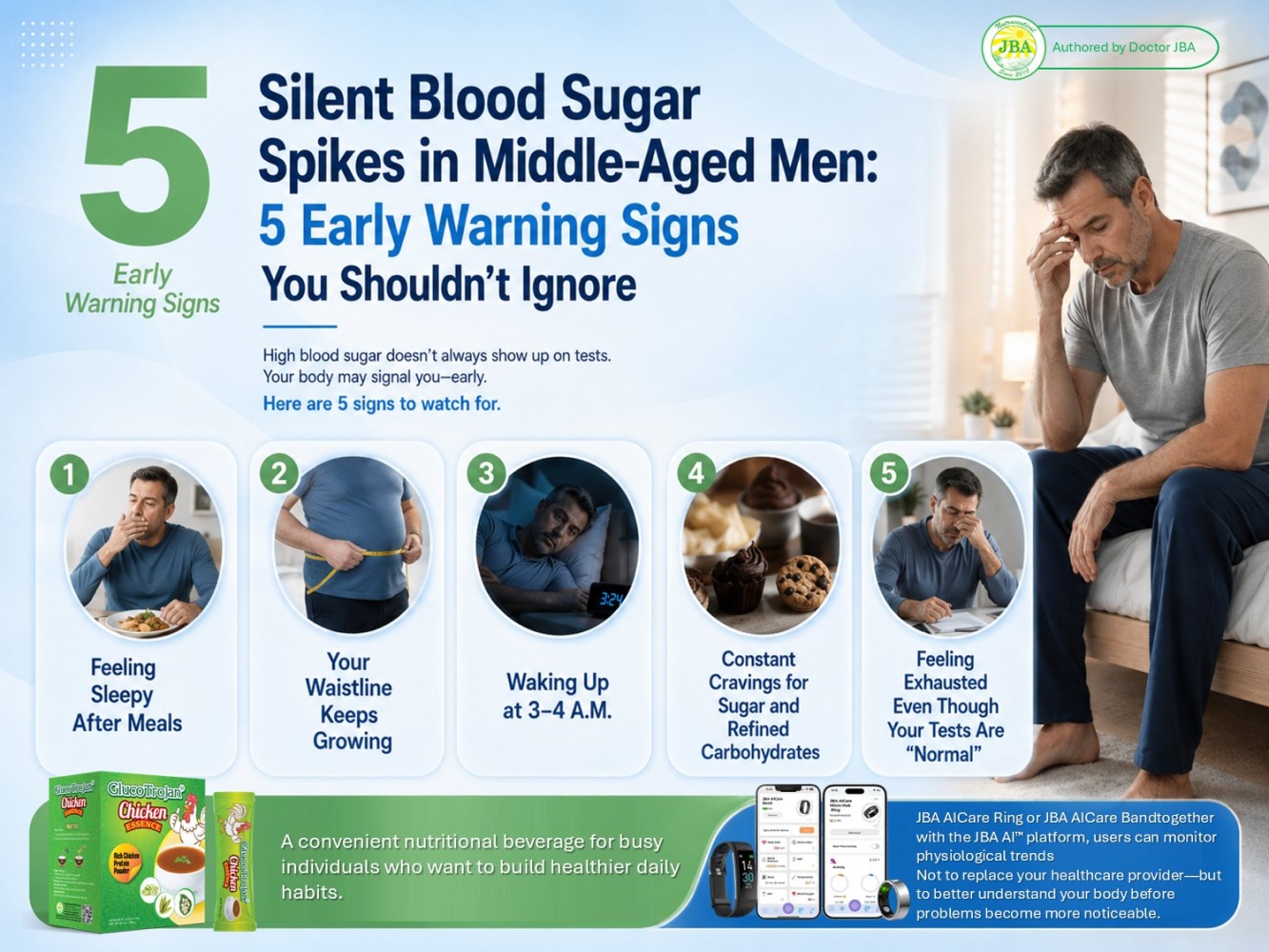
Silent Blood Sugar Spikes in Middle-Aged Men: 5 Early Warning Signs You Shouldn’t Ignore
Authored by Doctor JBA
“I don’t have diabetes.”
“I feel fine.”
“I go to work every day without any problems.”
That’s exactly what many men between the ages of 40 and 60 believe.
And it’s one of the main reasons millions of people don’t discover elevated blood sugar until a routine health check—or after complications have already developed.
The concerning part is this:
👉 Blood sugar usually doesn’t rise overnight.
👉 It often increases gradually over many years.
During the early stages, your body may continue functioning almost normally.
No pain.
No fever.
No obvious discomfort.
Yet beneath the surface, your metabolism may already be changing.
Why Are Men Over 45 More Likely to Experience Higher Blood Sugar?
As men reach middle age, testosterone naturally begins to decline.
At the same time:
• Muscle mass gradually decreases.
• Belly fat increases.
• Physical activity often declines.
• Stress accumulates more easily.
• Sleep becomes less restorative.
Together, these factors contribute to:
👉 Insulin resistance
This means your body becomes less responsive to insulin.
As a result:
• Blood sugar becomes more difficult to regulate.
• Belly fat accumulates more easily.
• The risk of prediabetes increases.
The challenge is that many men don’t notice any symptoms at all.
Or, if they do, they simply assume it’s part of getting older.
⚠️ Sign #1: Feeling Sleepy After Meals
You finish lunch.
You didn’t overeat.
But within 30 to 60 minutes, you find yourself:
👉 Fighting to keep your eyes open.
👉 Struggling to concentrate.
👉 Reaching for another cup of coffee.
This is one of the most common signs of post-meal blood sugar fluctuations.
When blood sugar rises quickly and then drops rapidly, the body often responds with fatigue and drowsiness.
⚠️ Sign #2: Your Waistline Keeps Growing
This is probably the easiest sign to notice—
yet also one of the easiest to dismiss.
Many men say:
“Every man my age has a belly.”
But belly fat isn’t just a cosmetic issue.
It’s closely associated with:
• Insulin resistance
• Cholesterol imbalance
• High blood pressure
• Cardiovascular health
Generally speaking, the larger the waistline, the greater the likelihood of metabolic health concerns.
⚠️ Sign #3: Waking Up at 3–4 A.M.
As discussed in our previous article, many middle-aged men regularly experience:
👉 Waking up around 3–4 a.m.
👉 Difficulty falling back asleep.
👉 Dry mouth.
👉 Feeling unrefreshed in the morning.
Possible contributing factors include:
• Stress
• Elevated cortisol
• Overnight blood sugar fluctuations
While this doesn’t apply to everyone, it’s certainly a pattern worth paying attention to.
⚠️ Sign #4: Constant Cravings for Sugar and Refined Carbohydrates
You just finished eating.
Yet you’re still craving:
🍰 Cake
🥤 Sugary drinks
🍞 Bread
🍜 Noodles
This isn’t always simply a matter of willpower.
In many cases, it reflects underlying metabolic imbalance.
When blood sugar fluctuates frequently, the brain tends to trigger stronger cravings for carbohydrate-rich foods.
⚠️ Sign #5: Feeling Exhausted Even Though Your Tests Are “Normal”
Many people experience:
• Low energy
• Reduced work performance
• Slower recovery after physical activity
Yet routine blood tests may still fall within the normal range.
That doesn’t necessarily mean everything is functioning optimally.
It may simply indicate a very early stage of metabolic change.
Healthy Metabolism Begins with Small Daily Habits
The good news is:
You don’t have to wait for a diagnosis before taking care of your metabolic health.
Many health professionals encourage:
✔ Maintaining a healthy body weight
✔ Staying physically active
✔ Prioritizing quality sleep
✔ Consuming adequate protein and dietary fiber
✔ Scheduling regular health checkups
🐔 GlucoTrojan Chicken Essence
Designed to support today’s nutritional needs, it contains:
• 7 grams of protein per serving
• Banana Stem Extract
• White Mulberry Leaf Extract
• Mango Leaf Extract
A convenient nutritional beverage for busy individuals who want to build healthier daily habits.
📲 JBA AI™ & JBA AICare™
One of the biggest challenges with blood sugar is that changes often occur quietly.
That’s why tracking long-term health trends has become increasingly important.
Using a:
💍 JBA AICare Ring
or
⌚ JBA AICare Band
together with the JBA AI™ platform, users can monitor physiological trends such as:
• Heart Rate (HR)
• Heart Rate Variability (HRV)
• Sleep quality
• Stress levels
• Long-term wellness trends
Not to replace your healthcare provider—
but to better understand your body before problems become more noticeable.
Final Thoughts
Elevated blood sugar doesn’t always begin with diabetes.
More often, it begins with:
• A slightly larger waistline
• Poorer sleep
• Lower energy
• Slower recovery
And that’s exactly when it’s time to start listening to your body.
Because the greatest danger isn’t simply having high blood sugar.
The greatest danger is living with elevated blood sugar for years—without ever realizing it.